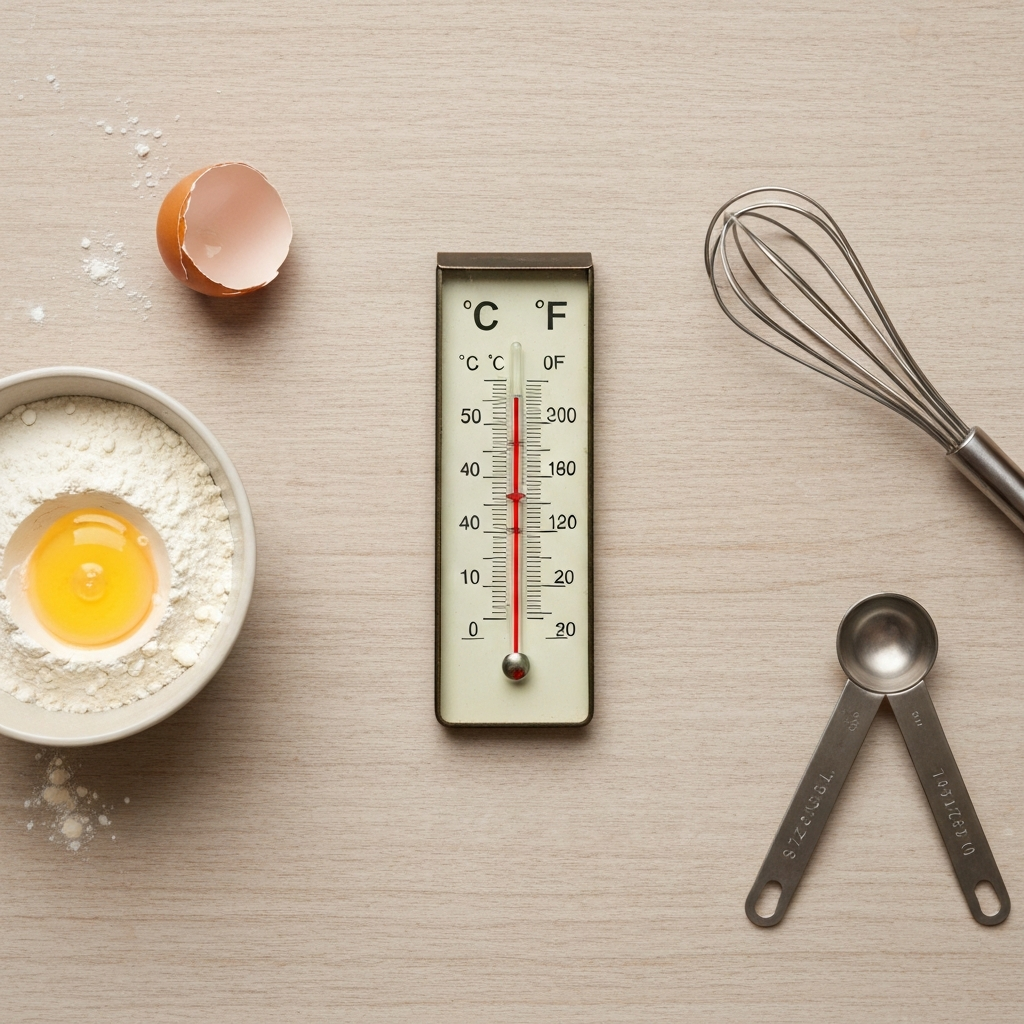
Did you know that a single degree difference in temperature can significantly impact baking results? Understanding how to convert between Celsius (°C) and Fahrenheit (°F) is a fundamental skill, especially when following recipes from different regions or using appliances with varied temperature scales. This guide makes converting 190°C to Fahrenheit, and other temperatures, incredibly simple.
Why Convert Temperatures?
Many recipes, especially those from Europe or Australia, use Celsius. On the other hand, recipes from the United States typically use Fahrenheit. If you’re trying a new recipe, it’s crucial to accurately convert the oven temperatures to ensure your food cooks correctly. Otherwise, you might end up with undercooked cookies or overcooked roasts. For example, understanding 190 C to F oven temperature conversion made easy ensures your baking is precise.
The Conversion Formula
The standard formula to convert Celsius to Fahrenheit is:
°F = (°C × 9/5) + 32
Let’s break this down:
- Multiply by 9/5: This is the same as multiplying by 1.8.
- Add 32: This accounts for the different starting points of the two scales.
Converting 190°C to Fahrenheit
Using the formula, let’s convert 190°C:
°F = (190 × 9/5) + 32 °F = (190 × 1.8) + 32 °F = 342 + 32 °F = 374
So, 190°C is equal to 374°F. This is a common oven temperature for many baking recipes.
Converting Fahrenheit to Celsius
If you need to convert Fahrenheit to Celsius, the formula is:
°C = (°F – 32) × 5/9
Here’s how it works:
- Subtract 32: This reverses the addition step from the previous formula.
- Multiply by 5/9: This is the inverse of multiplying by 9/5.
Quick Conversion Tips
While the formulas are straightforward, sometimes you need a quick estimate. Here are a few common conversions:
- 0°C = 32°F (Freezing point of water)
- 10°C = 50°F
- 20°C = 68°F (Room temperature)
- 30°C = 86°F
- 100°C = 212°F (Boiling point of water)
Remembering these benchmarks can help you gauge temperatures quickly. For more detailed explanations and common conversions, resources like Wikipedia’s page on temperature conversion can be helpful.
Practical Applications
Beyond baking, temperature conversion is useful in many everyday situations. If you’re traveling, understanding local weather reports in Celsius is important. When purchasing appliances, you might encounter temperature settings in either scale. Knowing how to convert ensures you’re always operating at the correct temperature. For instance, understanding different measurement systems is a key skill, similar to how Forbes discusses global business.
Frequently Asked Questions
How do I convert Celsius to Fahrenheit quickly?
For a rough estimate, you can double the Celsius temperature and add 30. For example, 20°C doubled is 40, plus 30 is 70°F, which is close to the actual 68°F. For precise conversions, always use the formula: °F = (°C × 9/5) + 32.
What is the easiest way to remember the conversion formula?
The key is to remember that you multiply the Celsius temperature by 9/5 (or 1.8) and then add 32 to get Fahrenheit. For converting Fahrenheit to Celsius, you reverse the process: subtract 32 and then multiply by 5/9.
Is 190°C a common baking temperature?
Yes, 190°C is a very common oven temperature for baking many items, often translating to around 375°F or 350°F depending on the recipe’s origin and desired outcome. Always check your recipe’s specific instructions.
Where can I find more information on temperature scales?
Reliable sources like The National Institute of Standards and Technology (NIST) offer in-depth information on measurement standards, including temperature scales.
Conclusion
Mastering temperature conversion between Celsius and Fahrenheit is a simple yet invaluable skill. Whether you’re a passionate baker, a frequent traveler, or just curious about different measurement systems, knowing the formulas and quick tips will serve you well. By understanding how to convert temperatures accurately, you can confidently tackle recipes and information from around the globe.