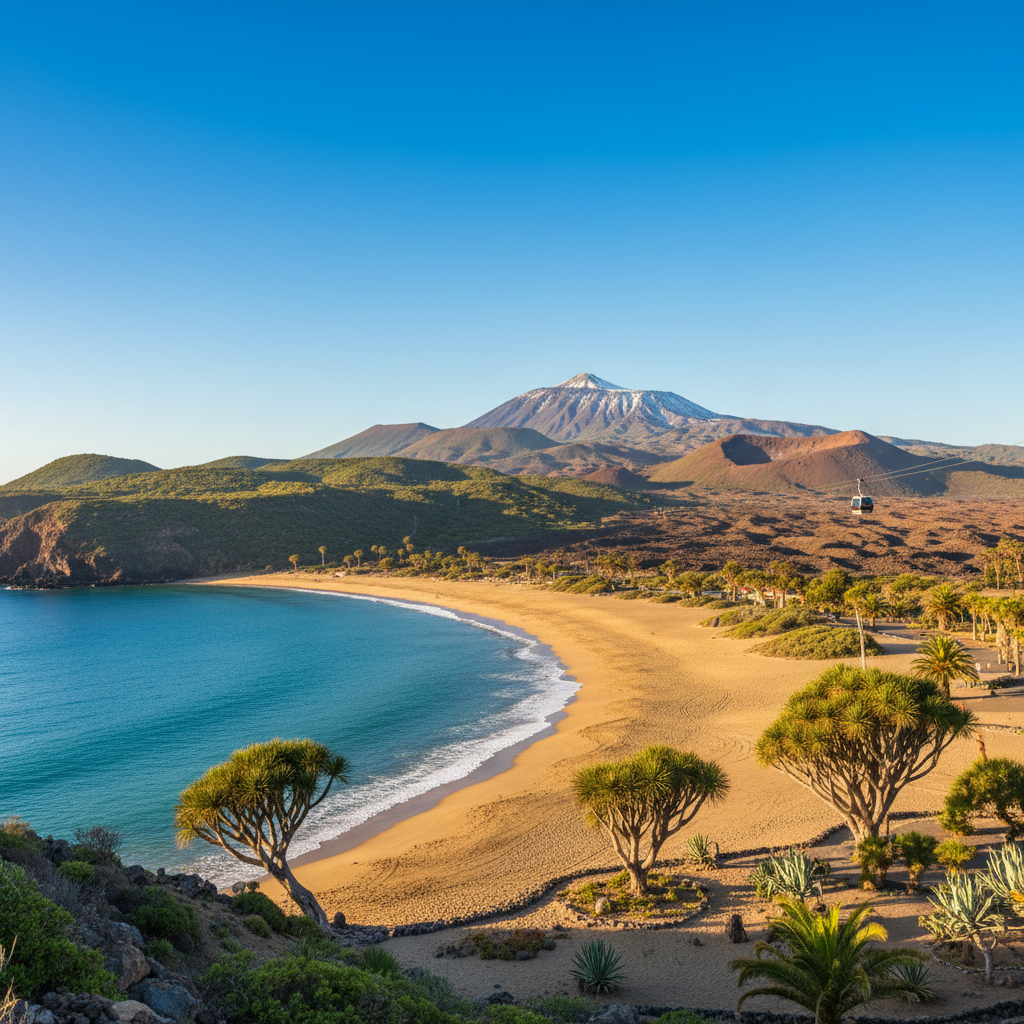
Did you know that the Canary Islands are home to a UNESCO World Heritage Site that looks like it’s from another planet? La Palma’s Caldera de Taburiente National Park is just one of the many natural wonders awaiting you in this Spanish archipelago off the coast of northwestern Africa.
Boasting eternal spring weather year-round, the Canary Islands offer a diverse range of experiences for every type of traveller. Whether you’re seeking thrilling adventures, relaxing beach days, or cultural immersion, this volcanic paradise has something to captivate you.
Explore Diverse Volcanic Landscapes
The very formation of the Canary Islands is a testament to dramatic volcanic activity. This geological history has sculpted breathtaking landscapes that are unlike anywhere else.
Teide National Park, Tenerife
Dominating the island of Tenerife, Mount Teide is Spain’s highest peak and a dormant volcano. This UNESCO World Heritage Site is a must-visit. You can take a cable car to near the summit for panoramic views that will leave you speechless. The surrounding landscape, with its solidified lava flows and unique rock formations, feels otherworldly. Hiking trails abound, offering opportunities to explore this majestic environment up close.
Timanfaya National Park, Lanzarote
Lanzarote’s Timanfaya National Park is another geological marvel. Known as the ‘Montañas del Fuego’ (Mountains of Fire), its volcanic cones and barren lava fields create a starkly beautiful, almost lunar, scenery. Here, you can witness the raw geothermal power of the Earth with demonstrations like water being injected into the ground to produce steam. The park’s unique ecosystem is a testament to nature’s resilience.
Caldera de Taburiente National Park, La Palma
As mentioned, La Palma’s Caldera de Taburiente is a colossal erosion crater, one of the largest in the world. It’s a lush, green oasis compared to the more arid landscapes of Tenerife and Lanzarote. Hiking through its pine forests and discovering hidden waterfalls is an unforgettable experience. The park is also a renowned spot for stargazing due to its clear skies and minimal light pollution.
Relax on Pristine Beaches
With their idyllic climate, it’s no surprise that the Canary Islands are famous for their stunning beaches. From golden sands to dramatic black volcanic shores, there’s a beach to suit every preference.
Playa de las Teresitas, Tenerife
This picturesque beach near Santa Cruz de Tenerife is known for its imported golden Saharan sand and calm, turquoise waters, making it perfect for swimming and sunbathing.
Papagayo Beaches, Lanzarote
Located in the Los Ajaches Natural Park, the Papagayo beaches are a series of coves with fine golden sand and crystal-clear waters. They offer a more natural and less developed beach experience, ideal for snorkeling and soaking up the sun.
Maspalomas Dunes, Gran Canaria
These iconic sand dunes in Gran Canaria stretch for miles, resembling a miniature desert meeting the Atlantic Ocean. Walking or camel riding through the dunes is a unique experience, and the adjoining beach is vast and beautiful.
Immerse Yourself in Local Culture and Cuisine
Beyond its natural beauty, the Canary Islands offer a rich cultural tapestry and delicious culinary experiences.
Explore Charming Towns and Villages
Each island has its own unique character. Visit La Laguna in Tenerife, a UNESCO World Heritage city with well-preserved colonial architecture. Explore the whitewashed streets of Teguise in Lanzarote, the island’s former capital. Or wander through the charming fishing villages scattered across the islands.
Sample Canarian Gastronomy
Don’t leave without trying papas arrugadas (wrinkled potatoes) with mojo sauces, fresh seafood, and local cheeses. The islands also produce excellent wines, particularly from Lanzarote and Tenerife. According to the Canary Islands Government Statistics, tourism is a significant contributor to the local economy, and embracing local cuisine is a great way to support it.
Thrilling Activities and Outdoor Pursuits
The diverse terrain and consistent climate make the Canary Islands a playground for outdoor enthusiasts.
Water Sports
From surfing and windsurfing in Fuerteventura to diving and snorkeling in the clear waters around all the islands, there are endless opportunities to enjoy the ocean. La Gomera, for instance, is known for its excellent whale and dolphin watching tours.
Hiking and Trekking
As highlighted with the national parks, hiking is a premier activity. The GR-131 trail, which crosses all seven main islands, is a challenge for serious trekkers. For more leisurely walks, numerous coastal paths and mountain trails offer stunning vistas. For more ideas, check out our guide to the best things to do in the Canary Islands.
Whale and Dolphin Watching
The waters surrounding the Canary Islands are rich in marine life. Taking a boat trip for whale and dolphin watching is a popular and often rewarding activity, with species like bottlenose dolphins and pilot whales commonly sighted.
Planning Your Canary Islands Getaway
With so much to offer, planning your trip is key. Each island provides a distinct experience, so consider what you’re looking for: adventure, relaxation, culture, or a mix of everything.
According to Eurostat, the European Union’s statistical office, the Canary Islands are a key tourist destination within Europe, attracting millions of visitors annually. This popularity is well-deserved, given the incredible variety of attractions.
Whether you’re drawn to the dramatic volcanic peaks, the sun-drenched beaches, or the unique island cultures, the Canary Islands promise a holiday filled with unforgettable memories. Explore the wonders, embrace the adventure, and discover why this archipelago remains a beloved destination for travelers worldwide.
Frequently Asked Questions (FAQs)
Q1: What is the best time of year to visit the Canary Islands?
A1: The Canary Islands are known for their mild climate year-round, often referred to as the ‘islands of eternal spring’. However, spring (April-June) and autumn (September-November) generally offer the most pleasant temperatures and fewer crowds.
Q2: Which Canary Island is best for families?
A2: Tenerife and Gran Canaria are often recommended for families due to their wide range of resorts, theme parks (like Siam Park and Loro Parque), and family-friendly beaches.
Q3: Do I need a car to explore the Canary Islands?
A3: While it’s possible to get around using public transport and taxis on some islands, renting a car provides the most flexibility to explore at your own pace, especially for reaching more remote attractions and national parks.
Q4: Are the Canary Islands expensive?
A4: Prices can vary depending on the island, time of year, and your travel style. While some islands can be more budget-friendly, they generally offer a range of accommodation and dining options to suit different budgets. Booking in advance can often secure better deals.

